
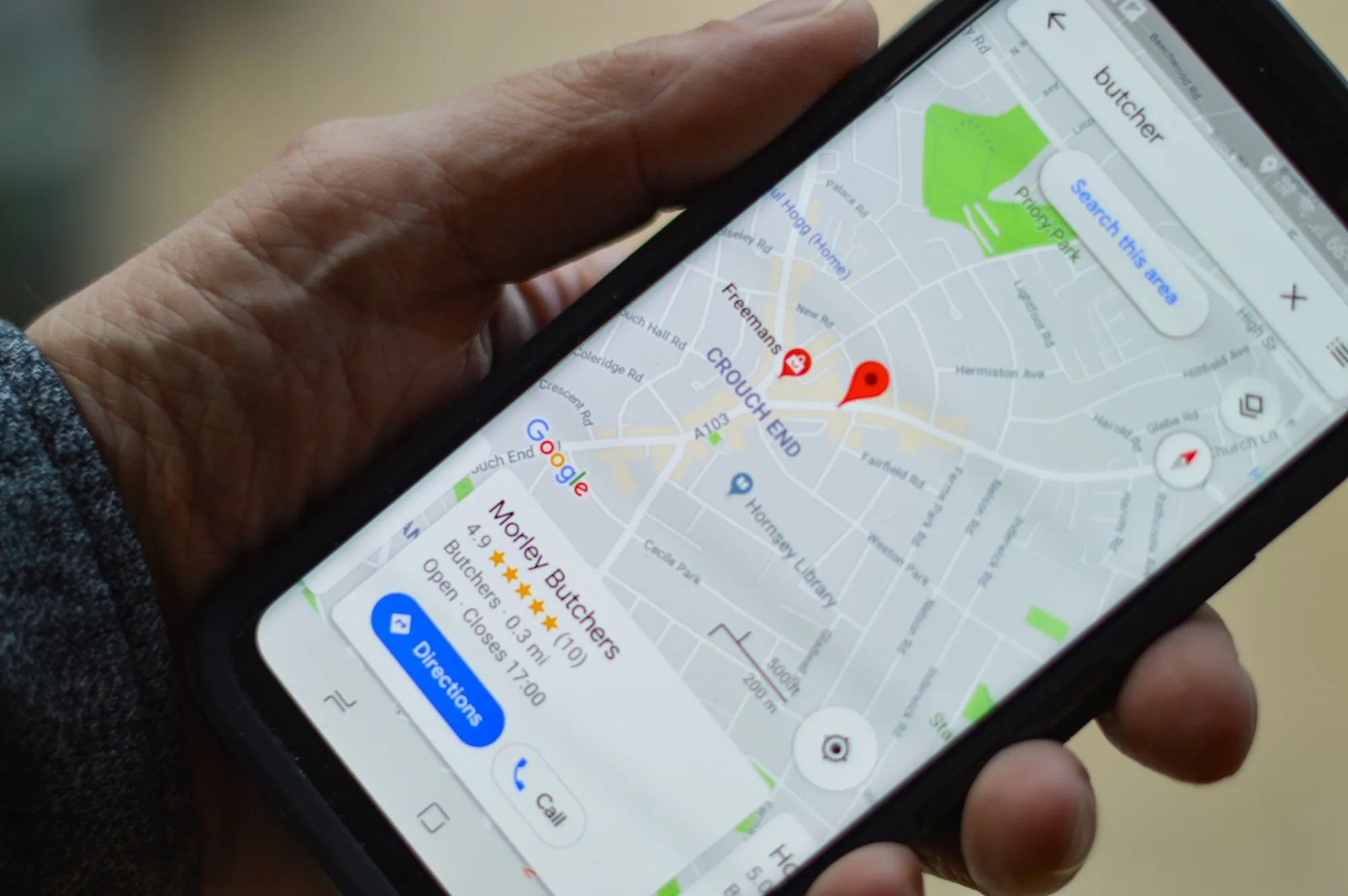
Charter boats rank in Google Maps when the Business Profile is complete and accurate, the reviews are strong and recent, and the website clearly shows what the boat does and where it leaves from. Google says it ranks local results mainly on relevance, distance and prominence. You can’t pay for a better local ranking.
Why Google Maps matters for charter boats
Guests search for a specific trip in a specific place
People open Maps when they have a trip in mind. Typical searches:
- “boat tours San Diego”
- “yacht charter Miami”
- “fishing charter Fort Lauderdale”
- “private charter Key West”
These are guests choosing a business, not browsing. They compare a few options, read reviews, look at photos and pick one. A listing that is missing from that short list does not get considered.
Guests decide on what they see
On a Maps listing, a guest sees your rating, your reviews, your photos, your categories and your website link. That is often enough to decide. Each of those is something you control, so each is worth getting right.
What Google says decides local rankings
Google’s help page on local ranking names three factors (Google Business Profile Help):
- Relevance: how well your profile matches what the person searched for. Complete, detailed information helps Google match you to searches.
- Distance: how far you are from the person searching, or from the area they named.
- Prominence: how well known you are. Google says this includes how many websites link to your business and how many reviews you have.
Google also states that more reviews and positive ratings can help your local ranking, and that there is no way to request or pay for a better one. We don’t claim to know the exact weighting beyond what Google publishes.
How to set up your Google Business Profile
Most charter operators already have a profile. Check these points against Google’s guidance.
- Verify the profile. Google says verifying tells it you are authorized to represent the business, so the profile is more likely to show up in search results.
- Use your real business name. Google says the name should reflect your real-world name. Taglines, hours, phone numbers and location details are not allowed in it (Google’s guidelines for representing your business). “Example Charters” is fine. “Example Charters Best Fishing Key West Cheap” is not.
- Be accurate about your location. Google’s guidelines cover addresses and service areas, including pinning your location on the map when no street address exists. If you meet guests at a dock or marina, read the guidelines before deciding how to list your address.
- Choose categories carefully. Google recommends the fewest categories that describe your core business.
- Keep information current. Google warns that a profile with inaccurate information might not show up for relevant searches in your area.
- Add photos. Google says photos and videos let you show customers what you offer. Boats, decks, the dock, the crew and real guests do this better than stock images.
- Reply to reviews. Google says replies show you value feedback. Answer every review, including the bad ones, in a calm, plain way.
Where your website fits
Google does not name your website as a Maps ranking factor on its help page. It does count links to your business as part of prominence. A website still matters for three reasons.
- Guests click through. The website link is on your listing. If the trip pages are vague, the guest leaves.
- Your details need a home. Your site is where the trips, departure point, group sizes, what is included and policies are spelled out. That gives search tools and guests something to check your profile against.
- Mismatches cause problems. If your profile says one thing and your site says another, guests lose trust and your information is harder to verify.
Clear service pages
Give each type of trip its own page: yacht charters, fishing charters, private charters, sunset cruises. A page that tries to cover everything is hard for a guest to read and hard to match to a search.
Clear location signals
Say where you operate on the site, in text. Name the marina, the city and the nearby areas guests stay in. Tie each trip to its place, such as “sunset cruises from San Diego Bay” or “sport fishing charters out of Fort Lauderdale.”
Listing and website that match
Same trips. Same departure point. Same phone number. Same business name. When the details agree everywhere, there is less for a guest or a search tool to question. This also helps with your wider local search work, which we cover in local SEO for tour companies.
Why charter boats show up inconsistently
Three patterns come up often:
- All the attention goes to the listing. Photos and reviews matter, but a listing that links to a thin website gives guests little to confirm.
- The website is one page. If services and locations aren’t spelled out, there is less for the profile to align with.
- The two are managed separately. Someone updates the profile after a season change. Nobody updates the site, or the other way round.
None of this is a trick. It comes down to keeping your information clear, current and the same everywhere.
What good setup looks like
A San Diego operator might have separate pages for harbor tours and private charters, a profile that matches, and recent reviews that mention the trips by name. A Miami yacht charter company might have pages for day charters and private events with the marina named. A Fort Lauderdale fishing company might separate half-day and full-day trips, with group options spelled out.
Done well, this makes your business easier to find and easier to trust. We can’t promise a position on the map. Rankings also depend on where the searcher is and who your competitors are.
Key takeaways
- Google Maps is a main place guests find and compare charter boats.
- Google says local results rely on relevance, distance and prominence, and you can’t pay to change that.
- A complete, accurate Business Profile with real reviews is the base.
- Your website should describe each trip and your location, and match your profile.
- Keep your information the same across the profile, the site and every listing.
Next step
If your listing shows up some days and not others, start by comparing your profile to your website line by line. Fix mismatches, then fill gaps in services and locations. Our page on SEO and AI search for boat charters covers how we approach the whole job for charter operators.