
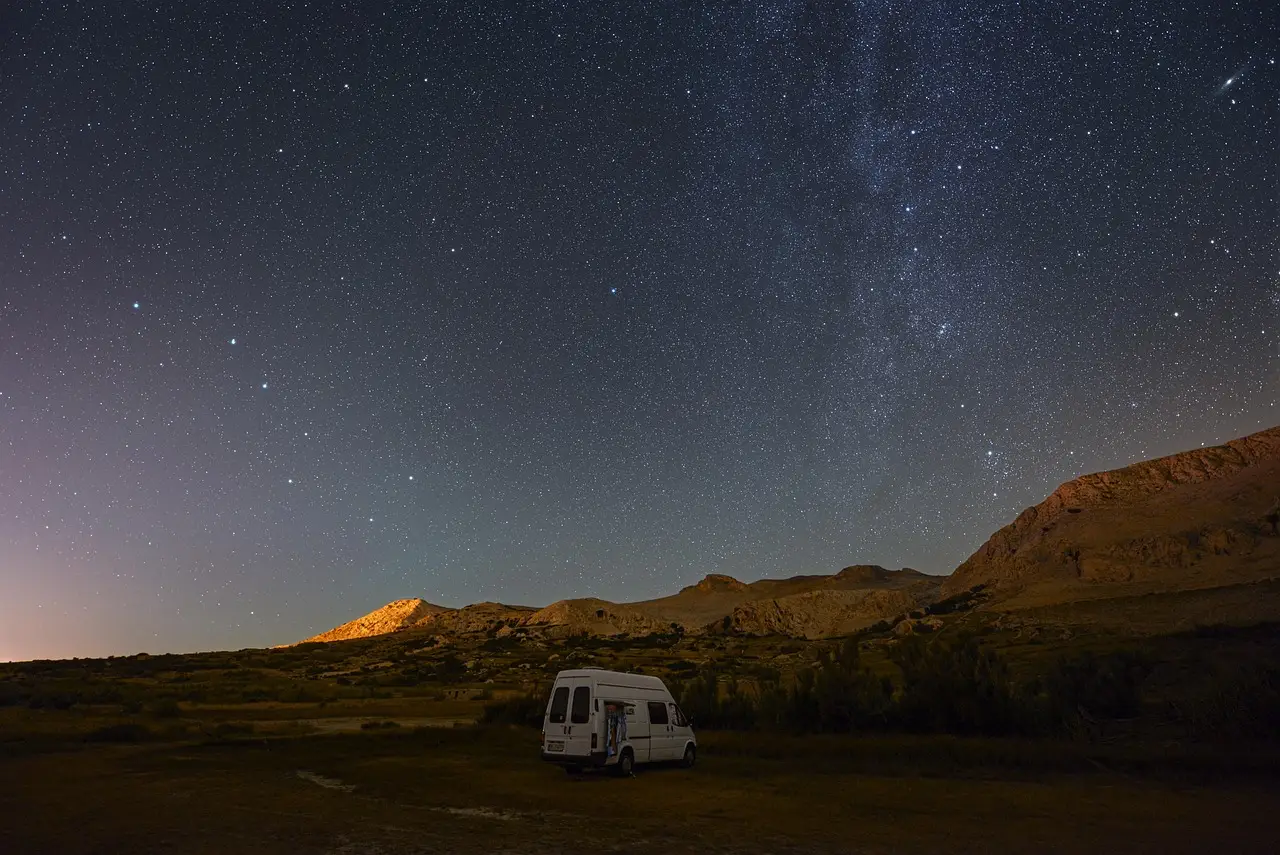
To book more RV nights, make the short gaps bookable when the return work is worth it. Help renters choose a rig for their actual trip, and give past renters a reason to book direct again.
Start with your own calendar. That Class C may be out every weekend and still have empty nights you can’t sell under your minimum stay. Meanwhile, a renter who brought the camper van back spotless last spring has heard nothing from you since.
The examples here use Southern California’s desert parks, and the same checks work for trips from any yard.
Linked pages checked November 16, 2026.
Help renters match the rig to the campsite
1. Put campground fit on each rig’s page
Put each rig’s length where a renter sees it before they start choosing campsites.
A family might want your 30-foot Class C for Anza-Borrego. The park lists full-hookup sites at Borrego Palm Canyon. That alone doesn’t confirm their chosen site fits your motorhome.
Nearby Tamarisk Grove has a 21-foot RV limit and no hookups. Your page can rule that campground out for the motorhome. For a camper van, check the actual length before you suggest it.
Joshua Tree needs the same care. White Tank and Hidden Valley have a 25-foot combined length limit. Send renters to the park’s campground length details and the campsite’s own listing before they reserve.
The claim that a motorhome is “perfect for every adventure” doesn’t answer the family’s question. They need to know what to check before they pay.
2. Build park pages around the trip you can supply
A Joshua Tree page should help someone decide which of your rigs to take. A couple in a camper van needs a different explanation from a family who wants separate beds.
The park’s booking details matter where they affect that choice. Joshua Tree offers reservations up to six months ahead and strongly recommends them for holidays, weekends and spring. Hidden Valley, Belle and White Tank are first-come, first-served, so don’t list them as sites a renter can reserve ahead.
Anza-Borrego also allows reservations six months ahead through ReserveCalifornia. Its page gives different seasonal windows, so send renters there for current dates.
Recommend a rig for the trip and explain what you’d pack. Keep any route advice to what you know firsthand.
Google’s helpful content guidance asks for original information and first-hand expertise. Your own explanation of the van’s sleeping setup has a place here. A rewritten park brochure doesn’t help someone choose from your fleet.
Make the next click lead to an available rig
3. Check your Google listing against your calendar
Open your Google listing as a renter and follow the booking link. It should reach the rig and dates in the offer. A link to the homepage leaves them to start again.
Google’s booking link instructions explain how to add the URL. They don’t promise that a manually added link produces a booking button, so look at what actually shows on your listing.
Google’s post guidance says offers need a title and dates; posts older than six months are archived unless a date range is set. Give a February desert offer its real dates, then update or remove it when those nights sell.
Add each rig as a custom service, with a description and price where useful. Google’s service editing instructions cover those fields. Name the Class C and explain its beds instead of giving every service the same “RV rental” description.
4. Ask what the renter would tell the next family
At return, ask how the layout worked for their trip and whether the family used the beds the way you expected. The couple in the van may mention something they wish they’d known before pickup.
That conversation can guide the review request. A review that names the rig and describes the trip helps the next family pick.
Google gives you a review link or QR code to share. RVshare’s review request advice suggests asking for feedback at return and sending the review link with the reservation number. Build the request into your return routine so it survives a busy day of inspections and cleaning.
5. Work out what each marketplace trip leaves you
Take one completed reservation and follow the money through the payout. Keep the rental charge apart from anything collected after return.
RVshare’s owner signup page says joining is free and owners set their prices. It also says RVshare verifies renters and deposits payments into owners’ bank accounts. The page doesn’t state a commission rate, so your own payout statement is the number to judge by.
For charges after the trip, its departure and return guidance lists a 10% commission on overages and fees. It exempts tolls, traffic violations and damages.
The same guidance calls for photos of every corner, the roof and the VIN. Skipping them risks a charge of twice the deductible from your payouts.
Do that paperwork at every handover, even when the next renter is waiting. Then judge the booking on what you kept after the work was done, and use that figure when you decide which empty dates are worth promoting.
Bring back the renters who know your rigs
6. Send the camper van renter a camper van trip
Save the rig and trip month with each past renter’s details. That’s what the next email is built on.
For a couple who took the van to the desert, an opening for that van is the reason to write. A family hears about the Class C they already know how to use. Make sure the dates are still open when you send.
An email twice a year, ahead of the months when your own trips book, is a schedule you can test. If you mention a campground reservation window, verify it on the park page first.
Put the open dates in the message and link to the relevant rig.
7. Film the bits you explain at every walk-around
A two-minute video lets renters see how they’d use the rig. Film the bed conversion in the motorhome. Open the camper van’s storage so a couple can judge where their bags would go.
People may hesitate to ask about emptying the tanks, so cover that too.
Show the fittings and explain your dump-and-fill arrangement on return. Renters need to know which jobs they handle and which you handle, straight from your actual rental terms.
Put the video on that rig’s page and your Google listing. Watch it with the sound off once. If the bed conversion is hidden behind your shoulder, film that bit again.
The full handover still happens at pickup. This video gives someone enough detail to decide if they want to rent the rig.
8. Give a nearby partner something they can pass on
Pick a campground or outfitter near pickup that your renters would actually use. Work out what you can send their way before you ask for referrals.
A link to the relevant rig or trip page gives them something specific to pass on. A shop helping a couple plan a desert weekend shouldn’t have to explain your whole fleet.
A referral code or a card you hand renters at departure is enough. Ask each caller where they heard about you, so you can tell if the arrangement produces calls.
RVshare’s owner marketing advice also suggests a QR code on a bumper sticker or window decal. If you use one, scan it yourself at the yard and make sure it opens the page you meant.
9. Turn the repeated packing call into a useful page
Write down the question you keep answering before pickup. That’s the page to write.
If families keep asking what to bring, show what comes with that rig. A look inside the kitchen cupboards answers a lot of it. Say if bed linens are included or cost extra.
Go RVing’s rental planning page says most rental companies offer housekeeping packages for a fee. That doesn’t tell your renter what you supply. Put your own contents and charges on the page.
Link to it when the question comes up again. If renters still need to call, find the missing answer and add it. A short page is easier to use while they pack.
10. Put one real opening behind the campaign
The simplest campaign RV rental owners can run between handovers is one park and one set of dates.
Say you want to book the van for a February Joshua Tree trip. Build the trip page around that van, and use the same open dates in your Google offer and the email to past renters.
Promotional RV rentals only pay if the rig can be turned around in time. Leave room for the dump-and-fill and inspection before the next departure.
If you buy ads, Google’s location targeting settings let you select geographic areas. Its negative keyword settings let you exclude unwanted search terms. The RV rental ads guide covers that setup.
Give the offer an end date. When the van books, update every place you advertised those nights.
Choose the work by the booking problem
Pick the row that matches what your calendar shows.
| Idea | Work involved | Check next |
|---|---|---|
| Rig and park pages | Write from your fleet | Campsite fit clear? |
| Google listing | Check links and offers | Correct rig opens? |
| Trip reviews | Add a return reminder | Request sent? |
| Marketplace trips | Read the payout | Amount kept? |
| Past-renter email | Match rig to renter | Dates still open? |
| Walk-through video | Film at the yard | Return jobs clear? |
| Nearby partners | Agree a referral route | Inquiries received? |
| Renter questions | Answer from your kit | Fewer repeat calls? |
| Park campaign | Promote chosen dates | Nights booked? |
Make the odd nights bookable only when they pay
A two-night gap can’t sell under a three-night minimum. Before you promote it, decide if another return that week is worth the work.
Last year’s calendar will show the gaps of one to three nights. Some were holes you could have rented. Others were time you needed for work on the rig.
For a gap worth selling:
- Change the minimum stay for those dates, if your booking tools allow it.
- Offer a nearby trip that fits the open nights.
- Price it so the extra handover is worth doing.
- If you hold the gap for direct bookings, block it on the marketplaces and check that every calendar shows it.
- Send past renters the exact dates and the rig.
Wheelbase’s RV booking page says it supports custom pricing rules and minimum stays, plus reservations on your own site.
Test your RV rental software with a real gap, whatever the vendor page says. Can a renter book those nights without changing the minimum for the rest of the month? Look at the return day too. An extra rental only helps if the rig can be ready for its next trip.
Get on camera when a month looks empty
Drew Sainte Marie ran his own tour boat company before he started Tour Boss. We asked him what he did first when a month looked empty and he didn’t want to throw ad money at it.
“The best kind of marketing, if you do it even close to right, is putting yourself on camera and hitting post on the social media page where your clientele mostly hangs out. If your guests are mostly on Instagram, then I’d hit Instagram hard until you’ve raised enough money to run ads again. Post at least once a day. Show up and be authentic. It doesn’t have to be polished. It has to be you, every day, in the place your guests already spend their time. Every time I bit the bullet and put my focus on social, my bookings skyrocketed. So when a month looked empty, that’s where I went first, before I spent another dollar on ads.”
Drew Sainte Marie, founder of Tour Boss
For an RV fleet, the odd nights above are a calendar fix. If a whole month is empty, use social posts to help more people find your rigs. Ask a few renters at pickup which app they scroll most, and start there. The walk-through clips from idea 7 give you your first week of posts. Put the open dates and the rig in each caption, and link that rig’s page from your profile.
This week, work from one rig’s calendar
- Pick your most-booked rig and fix its page, starting with length and campsite fit.
- Follow the booking link from your Google listing and correct where it lands.
- Find a gap you’d accept a short rental for, and test booking it as a renter.
- Email suitable past renters about that opening.
- Set the end date for the offer and note everywhere it needs updating.
The RV rental SEO guide covers the wider search work. The Southern California rental marketing page covers the local angle.
By the end of the week, you should know whether one tested gap on one rig can be booked straight from the email you sent.